Firelight Bird Dogs

Firelight Bird Dogs

Friday, January 21, 2022

A Privileged Life

 By Randy Lawrence


The text came in the early morning.  It was a photo of Lynn Dee cradling a week-old puppy on her lap.  The caption read, "This right here, is the real privilege of being a breeder." 

"Privilege."  Maybe some folks would find that an odd word choice for a veteran like Lynn Dee.  Her Firelight English setters entered their eighth generation last year.  Even for someone who breeds on a very limited and choice basis, that represents a very long time.  And it's still a "privilege" to hold a puppy?
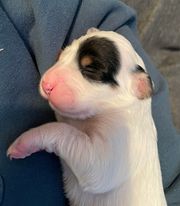

For Lynn Dee, it surely is.  It's part and parcel of why she's so good at what she does.  Eight generations in, and she's still excited to unwrap the possibilities inherent in a new litter of Firelight gun dogs.  She considers it a privilege to be a thoughtful steward of this particular strain of English setters and acts accordingly, meaning I've never sensed that she felt entitled - her life as a hunter/dog breeder has been a privilege earned.

Think about it. Years and countless hours and miles spent proving out a young dog under the gun on wild birds.  Research and pedigree study, photos and videos, hours on the phone and in exchanging emails, arranging in-person hunts behind potential sires, trying to find just the right mate for a special dog.  

Miles between Kansas and Idaho and Massachusetts and Michigan and southern Indiana to stage matings.  Vet trips.  Waiting out the first signs of a dog's pregnancy.  Long hours of perilous obstetrics.  The angst that goes along with risking an irreplaceable companion gun dog just to bring another Firelight litter into being.
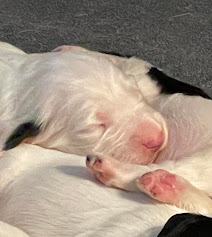

The countless hours in the whelping box, then later the puppy pen, then the big exercise yard, making certain all puppies are healthy and happily socialized before heading to their new homes, all the while gathering intel to make the best possible match with the best possible new owner, as well as get a sense of where this litter fits on the Firelight totem.  At some point will come the text, "Heck with it.  I am keeping them all," even as she knows that can never actually happen and keep her operation selectively small.

And don't even start toting up the monetary costs. Just know that it's "daunting," to put it gently.
There are the hours screening potential placements - more time on the phone, with more emails, texts, hosting visits, constant puppy consulting references.  The diplomacy involved in turning away some candidates, the faith required to accept others.  Because Lynn Dee's concerns and commitment do not stop when a Firelight puppy goes to live with it's new family.  In her role as lifetime guardian of every puppy she brings into this world, Lynn Dee stays as involved as the covenant she has with her puppy buyers will afford.
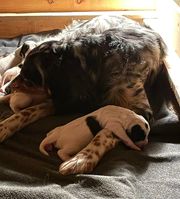

University of Houston professor and best-selling author Brene Brown insists, "What separates privilege from entitlement is gratitude." Lynn Dee Galey would be the first to point out her gratitude for the life she's been able to lead with her Firelight setters, not to mention enduring contact between herself and her owners.  They grant her the privilege of sharing the magic of a puppy's first staunch game bird point, that first puppy retrieve of a wild bird handled perfectly, first anything of consequence.  
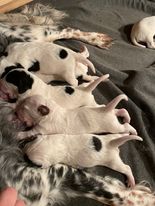
Of course with that yin privilege comes the yang: sharing the desolation of inevitable circumstances that steal young dogs, old dogs, any Firelight companion, away from us.

But all of that was far in the past or far into the future last Monday, as Lynn Dee picked up Dreamboat Annie's puppies, one at a time, studying them with her practiced eye, exercising what she considers the privilege of a lifetime of English setter bird dogs.
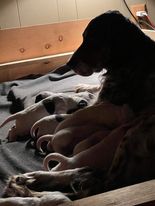


Tuesday, January 11, 2022

The "up" in Puppies


by Lynn Dee Galey


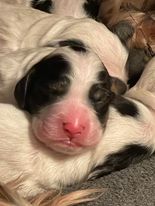
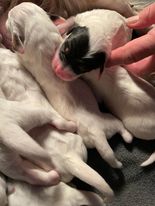
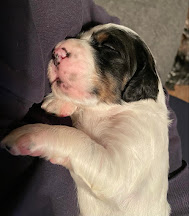
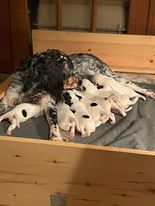
Up:  Eight beautiful puppies, 4 days old from my Annie x Nash breeding.


Up:  All puppies were delivered alive and naturally here at home and Annie is healthy and being a great momma.

Not so up:  The worry when puppy #3 took almost 3 hours to arrive, causing much worry and making momma scream when she finally pushed his bigger body into my waiting hands


Up:  Sharing news and photos of the puppies with excited owners who have been waiting many months for their next bird dog to arrive.

Not so up: Discussing with families who had their heart set on a female that there are not enough females to go around, would they consider a male.

Up: Starting each day snuggling a puppy while drinking my tea.


Not so up: Sleep deficit from sleeping in the same room with 8 mewing, moaning, squeaky puppies.

Up: The promise of well bred puppies who will be an ideal age to hit the woods and fields with their owners this fall. 


Monday, January 10, 2022

Dreamcatchers

By Randy Lawrence


The whelping box in Michigan may as well have been on the other side of the moon given the way I felt last evening.  It had been over eight hours since Firelight Dreamboat Annie off-loaded her first piece of precious cargo, a mostly white, tri-colored male.   Two hours had gone by since puppy #6 was delivered, and Annie was still in labor.  I knew the delivery had to be wearing on Lynn Dee and her friends and helpers, Paul Nensewitz and Bryan Burdick there at the whelping box.  Mostly, I figured Annie had to be getting weary.


This is the time in every puppy delivery I have attended where the little voice used to creep into my head: "What in the h-e-double-hockey-sticks were you thinking?  You wouldn't trade (Arran, Dixie, Fancy, Marquesa) for all the bird dog puppies on the planet!"


But that kind of half-panicked nonsense is for amateurs like me. 

Lynn Dee is no amateur.  She is the most competent brood minder I have ever known - thoughtful, thorough, intuitive, informed, cool in crisis, totally in tune with the dog in labor.  Paul is a Registered Nurse who has assisted Lynn Dee twice before, a most welcome ringer in the doggy delivery room.  Bryan was there as an understudy with aims of breeding his own setters one day, quiet and smart, a dog man's dog man, the perfect second to the two pros.   He rummaged through Lynn Dee's 'fridge and whomped up a good bait of comfort food during the vigil.   Both Paul and Bryan have Firelight setters of their own.  They know Annie and the rest of Lynn Dee's pack very well, providing another layer of calming influence.

Paul (l) and Bryan enjoying a post-hunt tailgate lunch this past fall. LD as photographer

The digital stream of photos and updates and funny anecdotes flowed from 11:29 am until the last puppy was born at 8:17 pm, and then on until the fellows went home and Lynn Dee settled into her nightwatch air mattress at 11:20 pm after one very long day of navigating Dreamboat Annie through the neonatal buoys.   Firelight Generation Eight, eight puppies strong,  rested in safe harbor.

But forget for a moment an all-day whelping.  Well before that, this batch, like all Firelights, has been a long time coming. 

There were the years of watching their dam come into her own in the field, a fast, cover-slashing, tail-cracking performer whose white undermarkings flash on even the dullest days.  She goes about her business with bold purpose and stands game with high style and electric intensity, a worthy heir to her superb dam, the hard-driving bird finder, Firelight Mustang Sally, and Annie's sire, my boon companion, the greatly missed October Blue Doc.  


Firelight Mustang Sally (maternal grand dam...one truly "grand dame!")

In some ways, this litter carries even more than the usual edge-of-our-seats anticipation.  For Annie's second mating, Lynn Dee continued research she had begun years earlier, then took time out of her hunting season to travel 1500 miles round trip to hook Annie up with a dog named Nash, a stone cold bird dog with uncommon "receipts," as the young people say.  How Nash's background nicks with Annie's is...well...the stuff of which dreams are made.

Nash on wild birds - Kansas


Nash, cheesecake shot, training at home.

In that vein, I have been thinking of Dreamboat Annie's puppies as a merry band of proto-dreamcatchers.  Authentic dreamcatchers have their roots in Ojibwe culture, a tribe that, by the early 17th century, had established itself in birch bark wickiups scattered through the region where Annie lives, hunts, and whelped her litter.

The original dreamcatchers were crafted of willow hoops woven with sinew, draped with game bird feathers, and hung above sleeping platforms.  The notion was that dreams from the spirit world would be filtered through the dreamcatcher's web with only good dreams making it through.

Birdhunters are nothing if not dreamers of good dreams, absolute fools for signs and portents.  A photo of puppy #5, a tri-colored male, came in at 4:33 pm.  


That's about the time I must have gotten something in my eye, I guess.  Anyway, the photo became a bit wet and blurry, coming back into focus looking like this:

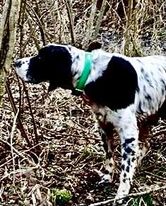
My late Doc (maternal grandsire)

That whelping box may be 413 road miles from this cold and snowy hill farm, but it is centered smack dab in the middle of a sentimental old bird hunter's soul.  


Saturday, January 1, 2022

Be It Resolved!

 by Randy Lawrence

(Scaled Quail on the Mexican Border)

On the eve of New Year's Eve, I laid out several resolutions for 2022.  Be it resolved that beginning January 1, I shall abstain from K-Pop music, running marathons, field trialing Wirehaired Dachshunds  or Small Muensterlander Pointers.  I am also going to stop being so darned judgmental - even of those who field trial Wirehaired Dachshunds or Small Muensterlander Pointers.

However...

Having said that about being, as an eye-rolling friend recently put it, "so freakin' judgey" (What kind of person whips out a make-believe word like "judgey"? ), I must confess that I will likely never stop believing that I can take the measure of someone's very soul by the way he or she handles a shotgun, a gamebird in possession, and a bird dog. 


(General Sherman, American Water Spaniel, works a hot corner in the dove patch)

Gun manners begin and end with safety.  Those practices are iron clad, and those careless with firearms cannot join our hunts.  But along with safe gun etiquette should come other manners: Shooting only birds the dogs have handled correctly.  Never shooting directly over a dog's head.  Of being sensible about the gun barrel in relation to dogs underfoot, about safety while walking in on a point.  Having a crystal clear sense of what constitutes a "sporting chance," passing up hero shots that are more likely to wound than kill. Having an equally clear sense of "enough" in tallying a game bag.  Making sure empty shot shell hulls ejected to the ground are always retrieved - ours and those left by more shiftless others.  Being the first to say "Your bird!" when a companion happens to fire at the same instant and the shot's author is in some doubt.

A bird in hand is a treasure.  A gift.  Respect for same means making every attempt to recover a downed bird.   Respectfully spreading out game that could otherwise just be tossed in a pile in the September heat when doves are pouring in over the stand.  Quickly and humanely dispatching a bird ferried in with its head up.  Paying attention when stowing game at a hunt's end, making sure it's in the best possible shape for the larder upon arrival back home.

And whether it is a Firelight Setter or a fussbudget Wirehaired Dachshund pressed into the role of bird dog, watch how the handler makes connections with the dog at the vehicle, going into the woods, during and after the hunt.  Connections that require but a light, deft hand.  Connections that teach, that sustain, that honor the dog as a partner. 

Those constantly whistling and hollering at their dog during a hunt are probably one-and-done as hunting partners for many of us.  Does that person not trust her or his dog, at first to learn the business of its genetic inheritance, then later the business of experience and training?  Does that person give her dog the benefit of the doubt in curious circumstances without blinking issues which need attention?  Is the handler paying attention to the weather and the terrain to have an idea of what her dog might be experiencing in terms of scenting conditions or footing? 


Does the handler carry enough water along when conditions warrant?  Does he pay attention to changes of gait that might indicate anything from snow balls between the toes to a cut pad or torn nail?  Does the dog's partner wipe the dog down at hunt's end, make at least a quick check beyond the obvious for stickers, burrs, deer ticks, etc., and make secure, dry, and draft free travel accommodations?


I confess that the person whom I judge the most against these standards is myself.  My family has never gotten over the careless gun handling that claimed the life of my dad's older brother;  I can never erase the memory of the time a dear friend asked to look at my bird gun back at our motel room, drew that sleek double out of its slip, then, from gun safety habit, broke it open.  Twenty years later, I can still see the gleam of brass from across the room, the sick flip of my stomach over the gun I had left loaded, and then mindlessly cased as I broke up a dog ruckus (made possible by heedless handling) at the truck tailgate.

I remember one of my bird dog mentors coming up from behind and softly saying, "Did you drop these?", offering the pair of purple 16-gauge hulls I'd ejected in disgust after an embarrassing miss on the edge of a South Dakota fence row.

I think back on all the companions who were meticulous in their gun manners, thoughtful in their sporting ethic, considerate of their dogs.  The ones who by their every action honored every bird brought to hand.  The ones who brought extra dog water to share.  Who offered a spare towel to wipe down my wet dog.  Who showed by example how to allow for conditions, how to support a dog on the move, on point, and finishing a retrieve.  Whose love for the sport and whose generosity toward me helped me live down, live through, and move beyond the hallmarks of a clueless maladroit.
(Photo by Nancy Johnson)

All of the above adjudicated me redeemable, and perhaps that's a more worthy resolution for 2022 - to be more discerning than judgey about when, how, and to whom we extend that same courtesy of sharing a Better Way to enjoy this sport that gives us back so much.

As for running shoes on my doorstep, the boy band BTS on my music playlist, or a Small Muensterlander riding shotgun in the 'Yota?   I shall hold firm.  May 2022 keep you and yours healthy, happy, and finding better ways to get right with that good bird dog.


Thursday, December 30, 2021

That Most Important Thing

By Randy Lawrence


Not long ago, I read a wonderful epitaph for a companion gun dog.  This dog had had a rather indifferent history, finally landing in a home he could share with a family who understood him, doted on him, got him more time afield than ever in his past lives and, frankly, put him on to the fast track toward Living Happily Ever After.

When the dog passed on, a discerning friend wrote, "He passed away finally loved.  That's the most important thing."

Understand that this isn't coming from some fur-baby-besotted twit, but a member of the cognoscenti, a veteran handler who runs a short string of hard-going gun dogs... who share most every aspect of their handler's life.

"The Most Important Thing"... It occurs to me that in the realm of working dogs, particularly our world of sensitive, responsive companion English setters,  a higher order "love" for our dogs deserves a thoughtful review.

It should go without saying that we provide the creature comforts - quality food, clean water, dry shelter, regular vet care and grooming.  Doing so shows concern.  Responsibility.  Humanity.

But what about love?

We can admire a dog that cruises the woods with brio.  We take pride in a staunch point, a great mark on a downed bird, a tail wagging parade of a retrieve.

But what about love?

Maybe we keep a dog-friendly household arranged around our dogs' comfort and safety.

But what about That Most Important Thing?

The expression "Quality Time" has been reduced to a cliche in our culture.  I would suggest that it's not a cliche to our dogs.  Beyond their absolute pleasure in their work, created by an upbeat partnership with a savvy, collaborative, clear communicator human, maybe the thing most dogs want (and one of the reasons we invited them fireside, prehistory) is our Quality Time.  They relish our focused attention -  having their needs respected, being played with, petted, enjoyed as companions supported in ways that make them a pleasure to be with, rather than neurotic, furry crosses to be borne.
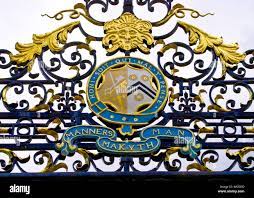
A guy named William of Wickham founded Great Britain's New College in Oxford in 1379 (dubbed "New College" to distinguish it from another academy founded fifty years earlier - leave it to the Brits to persist in referencing a 650 year-old school as "new").  The founder gave permission for the school to use his personal coat of arms and motto, "Manners Makyth Man."   That idiom remains on the ornate wrought iron entry gate of the school to this day.

Understand that for Wickham, Lord Chancellor to two British monarchs,  "manners" related both to personal character as well as etiquette.  What could better describe education's role in shaping students' lives?  What better backdrop for a loving relationship with our bird dogs?

In that sense, both "character" and "etiquette" are about thoughtfully, routinely, helping our dog with boundaries...which starts with our own decisions regarding, to paraphrase another Englishman, Winston Churchill, "up with what we will or will not put."

Frankly, it's easier to do this one person-on-one-or-however-many dogs with whom we share our lives.  If we bring our gun dog into our family setting, all members have to be coached on things like toilet training etiquette, door etiquette, leash etiquette, furniture etiquette, family meal etiquette, counter surfing etiquette, trash can etiquette, bed time etiquette, car etiquette, kid and cat etiquette, barking etiquette, etc., etc.  

It becomes a matter of character, of wanting Quality Time with our dogs in the woods and in our homes enough to be clear, consistent, firm and fair, looking at it from the dog's perspective in order to establish order that suits our own.  Consistently managed, house manners can be the linch pin of our field connection with our dogs as well.  Makes sense, right?

It's only natural that we bird dog people spend a lot of time thinking about performance.  The too-often-unspoken bottom line is that that dogs that adapt to our sense of manners in the field get hunted longer and more often because, quite frankly, they are more pleasure than pain to take into the woods.  

Likewise, dogs that get the "house rules" get more house time.  More petting time.  More talking time.  More everything, which means more of us, more of them for us.  More Quality Time.  Love.

The Apostle Paul, writing to the church in Corinth, could have been talking about molding the manners that makyth men, women, and bird dogs in his famous list of love's most vital components: Patience. Kindness.  Trust.  Hope.  Perseverance. A snail-slow fuse to anger...all ingredients to a more fulfilling relationship with other people, let alone building a better companion bird dog.

As Partner Handlers, what better New Year's assessment than to step back and re-evaluate our relationship with our bird dog?  Are we holding up our end of the dog/human partnership?  Are we willing to do what needs done in a thoughtful, humane, dog-centered manner to make our lives together informed by, buoyed by, heck, made meaningful by being filled with that Most Important Thing?  


Thursday, December 23, 2021

A Bird Bright As Christmas

by Randy Lawrence


My earliest Christmas memories come through fog on the storm door to my grandmother's hot kitchen.  I would press against the glass watching the men gather in the barnyard, my grandfather and his brother, his brothers-in-law, two sons-in-law, and his only son, my mother's brother Ronnie.  Most of them were dressed in the same grey and off-white striped railroader coveralls they wore farming.  

Over top they shrugged into brown duck hunting coats and vests like the ones men, and sometimes even women, wore in the Field and Stream magazines Grandpa kept in a stack by his overstuffed living room chair.  To a man, they sported dingy red ball caps or ear flapped, red plaid Stromy Kromers, their sole concession to safety color.  

The impossibly long guns they pulled from the trunks of their family cars - nobody in my family had a pickup truck back then - were all repeaters, pumps mostly, and I can still see our menfolk cramming red or green or yellow shells in spring-worn magazines, the clacking racking sound of closing actions loud enough for me to hear over the kitchen bustle behind me.  They talked and laughed in puffs of white steam and cigarette smoke while Grandpa's farm dog, Rover Deeds, all wriggle and wag, moiled around their legs.  
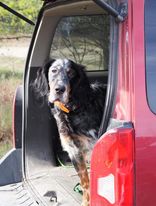
Rover Deeds was a beagle-collie mongrel named after an erstwhile beau of my mother's from years ago. Grandpa insisted that while Rover Deeds would run rabbits, what the dog loved most was to chase pheasants,  the trophy of these annual Christmas Day hunts.  
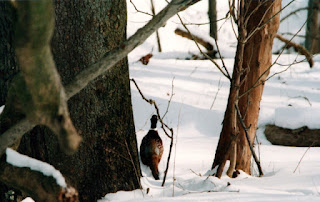
My Uncle Ronnie liked to claim Rover Deeds would even point pheasants "like a real bird dog."  If he did, nobody else ever saw him do it.


My grandfather and his brothers all had town jobs, several of them alongside Grandpa at the foundry in town.  During the Second War, they had worked years without a day off, 12 hour shifts and overtime, back when overtime was only half pay.  When the winter weather was bad, they stayed in town for days at a time, which meant it was up to their wives and children to keep a house with no running water and tend sheep, cattle, and hogs until someone could get a tractor and plow county roads.


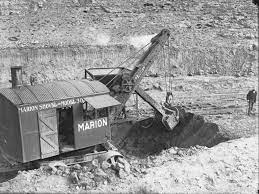
(The Marion Power Shovel Company where my grandfather worked for so many years building excavation machinery.)


But those backbreaking, lung fouling hours shoveling coal into furnaces to make steel to build the big steam shovels was a means to an end - a steady paycheck that propped up what they really wanted most to do: farm the land.   

I don't know that any of them ever owned his own place, but my grandfather and his brothers were never happier than when they were working their rented ground or raising swoop-horned, half-wild Hereford cattle they bought cheap off the boxcars in from the western states.  Their saggy, woven wire fencerows studded with Osage Orange fenceposts were rough and wide.  Sheep pastured in small woodlots that were never overgrazed.  Cranky antique combines and corn pickers proved indifferent about making a clean harvest of grains coaxed out of poor soil.  

An unintended consequence of those hardscrabble farming practices was the creation of nearly ideal cover and feed for cottontail rabbits and ringneck pheasants...and after farming, the thing my grandfather and his kin loved best was hunting rabbits and pheasants.  The one time they for sure could get out with the gun was Christmas morning before the big dinner, before the afternoon gift exchange in Grandma's crowded living room.

Once the hunt was out of sight from the kitchen door, I could scramble up the wooden steps to a freezing upstairs bedroom and watch much of the action from a bedroom window.   Our men walked up game in a line, Rover Deeds not so much quartering as just dinking around and snuffling a few dozen yards ahead.  At least twice I got to see the big dog start a rabbit, sparking a fusillade that echoed off the slumping barn and machinery sheds.  Only once did I actually witness pheasants come up in front of the guns, only to batter away toward a far tree line while the skirmish line stuttered to a halt.  Some of the guys reloaded, shaking their heads, and I could well imagine the grief they were getting from the others.


But they didn't always miss, especially my Uncle Earl and Grandma's brother George.  There were always rabbits to clean in my grandparents' mud room, and if I stayed back and didn't ask too many questions, I could watch Grandpa or Uncle LeMoyne make deft cuts across the rabbits' stiff backs with their pocketknives, blades ground away to thin slices of steel, pulling fur to reveal red meat pressed against bluish skin membrane.  I am sure I recoiled at steaming entrails tumbling down into a galvanized bucket for a later trip to the hog lot, but I hung in, desperate to be some small part of the hunting I knew I would love if ever I had the chance to go.

For me, the most wondrous of Christmases were when the the men came into the mudroom to pull pheasants, gaudy as bright holiday wrapping paper, from game pockets of those stiff canvas jackets.  We kids were in awe of the big birds and clamored for tail feathers we could parade back into the warm kitchen or use like swords in mock duels until somebody's mom evicted us from the flurry of last minute dinner prep.  I do not remember anyone dressing those pheasants on Christmas morn, instead drawing and hanging them to age for a couple of days until my grandmother could pluck them in time for a special New Year's Day meal.


(Leigh Yawkey Woodson Art Museum: "Birds In Art")

My grandfather died the year before I bought my first English setter, four years before we hunted our first Elhew pointer, more than three decades before the first Firelight setter came to live with me.  He never got to hear about our trips to the Dakotas and Iowa, about ringnecks posed like Christmas ornaments in bare trees, about the golden eagle we once watched stoop on a snow plastered copse, scattering pheasants in all directions.  I did not get to tell him about the piebald bird that cackled up in a spray of snow, pinned by a hoary-coated old setter, two of his get locked down to honor his last stand of one freezing New Year's Eve, or how warm and full the game pocket of my own canvas vest was on the long walk back to the truck.


That pheasant is one of only two pieces of taxidermy I own.  This time of year, I can see the glow of my front porch Christmas lights on his window perch.  He is anchored in flight off a chunk of Osage Orange, much like the pile posts he flushed from in the late afternoon gloaming.   I doze in the shadow of that holiday bird, my Luke or Deacon or our buddy Seth clambering up to wedge in with me in the easy chair.  

I can pet a silky, chiseled setter head and conjure the aroma of turkey and sage in my grandmother's crowded dining room, my mind's eye watching the adults find their seats around the long table the older kids had stretched with pegged wooden leaves and covered with tablecloths embroidered with mistletoe and Christmas wreath patterns.  I can still see my cousins and me parked at a couple of card tables off to one side, our pheasant tail feathers confiscated, our plates made for us by our moms.   That's about when Grandma would glare us into silence so Uncle George could give thanks on Christmas Day, the most magical of which always began with pheasants.


Monday, December 20, 2021

Flood Tide

by Randy Lawrence

In an earlier blog, we wrote about a precocious little setter, Firelight Kyah, and about the opportunities provided for her in the field.  Admittedly, she had maybe more than her share of the Right Stuff at birth, but, metaphorically speaking, she has entered into the last weeks of her first season runnin' with the Big Dawgs when most others her age are still just venturing off the porch.  

With her smooth, athletic gait, she hunts tirelessly, gradually to more likely cover, staying found, naturally backing her elders, finding her own birds, crowding those birds, learning with every ruffed grouse she couldn't manage to set, and finally pointing, and holding, and retrieving birds she handled correctly...

...at under seven months old.


So let's acknowledge right off that Kyah's partner is Not Your Average Hunter of Grouse.  Nope.  He is what Lynn Dee refers to as a "One Percenter," someone who has arranged his work and his life around a high level pursuit of his favorite sport.  

He knows cover, because he knows ruffed grouse with a naturalist's almost insatiable curiosity about food and cover, habits and habitat.  He has open mind about what constitutes a "birdy spot," and hunts in times and places others simply drive by because it doesn't fit their stereotyped sense of "good cover."  He finds new and different grouse coverts because he has a good set of legs and lungs underneath the keen will and curiosity and, dare I say, pride, in finding more places that give his dogs and him the best main chance.  

He is a minimalist handler, consulting the GPS tracker when one of his setters hasn't come around in a bit, then heads that way, expecting (and this is important), EXPECTING to find his dog or dogs standing a bird.  He doesn't speak to the dogs locked down on scent, loads his double gun when he gets on the scene, and walks in ready to kill a grouse for his dogs and, frankly, for the edge to his hunter's soul.  That he is a crack shot completes the resume.


In short, Kyah's partner makes Real Grouse Dogs in the woods, letting his older dogs and the birds and cover and conditions do the training.   Which brings us to another metaphor, this one from another guy familiar with passionate ambition.

In the play Julius Caesar, William Shakespeare writes, "There is a tide in the affairs of men/Whick taken at the flood, leads on to fortune.  Omitted, all the voyage of their life is bound in shallows..." 

The bard wasn't writing about bird dog prospects, but he nailed it anyway.  Pups like Firelight Kyah, bred from generations of well-tempered Real Grouse Dogs, come with all the ingredients.  It's up to the people to add ruffed grouse and patience and lots of boot leather, getting them into coverts they can handle on serious numbers of wild birds that they probably can NOT handle...at least in the beginning.

Owners who stay positive, who can accept puppy gaffes as something interesting rather than something vexing, who can carve out enough reps in good country, will succeed.  I would venture to say they will have a Real Grouse Dog sooner rather than later, in fact.  Maybe not Kyah soon, but sooner.


Seems obvious, right?  Unfortunately, it must not be.  Or at least it sometimes exacts more from owners than they are willing or able to give.  How many promising young gun dogs, left on shore during the flood times of their canine learning period, never make it out of the shallows, their owners content to keep them as beautiful side pieces to go with the fancy shotguns and the latest in unscarred boots and upland tactical vests, to pose with the occasional wild bird scratched down any way, any how.

I'm not the first hunter to make the Shakespearean gun dog connection.  Datus Proper did it in his intriguing book Pheasants of the Mind: A Hunter's Search for a Mythic Bird.  But I think of that excerpt every time I see a young dog trying to find herself in the grouse woods, too often with a handler who doesn't really have a clear idea of what he wants the young dog to accomplish.

One must feel for breeders whose labor of life and love is producing exceptional gun dog prospects.  How hard it must be for them to see What Could Have Been turned into a furry fireplace andiron or Santa-hat-wearing honorary family member on the annual Christmas card?  What the best breeders are hoping for from us, beyond a loving, healthy, and involved home life with our dogs, is commitment to do our homework:  establishing a solid, loving, working connection with our dogs, conducting a safe introduction to gunfire, then extricating ourselves from our workaday travels and travails to walk in times and places that give our puppy every chance for wild bird contacts, for learning from mistakes, for going to school on the birds that are to be its life's work.

Lynn  Dee tells about a social media post with a veteran Grouse Hunter posed with his young dog.  The caption read something like, "Yep.  Another pair of boots, the next truck, and he'll make a dog," meaning that only productive time afield can make a Real Grouse Dog.  Our obligation to that goal is to launch our puppy at flood learning tide, making a pact with her to do whatever it takes in helping her use her genetic inheritance, paddling out of the shallows and wag-dancing down off the porch to keep time with The Big Dawgs.

"Better three hours too soon," wrote that unwitting sage of bird doggery in The Merry Wives of Windsor, "than one minute too late."